Sometimes, you have to go back to basics. Break down your whole understanding of something, and start again with a better foundation.
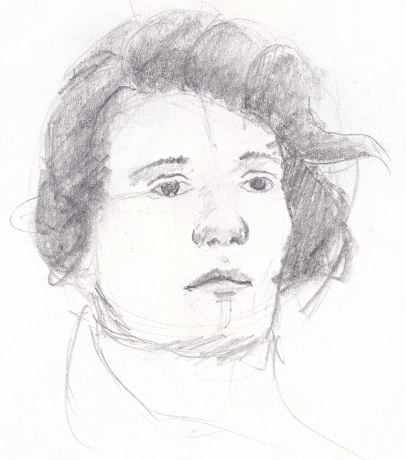
This evening, I went to a life drawing class. I’ve gone to many of these, and have learned a lot. But the foundation of my drawing isn’t quite solid: I’m only following lines that I see in front of me. Let me demonstrate:
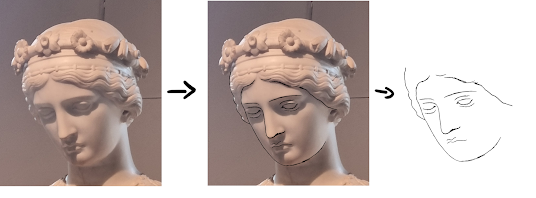
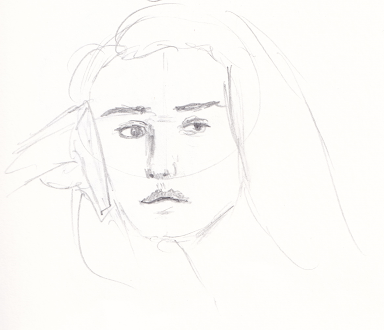
What I used to do is what most people do: essentially, trace over the obvious lines in front of you. Spotting the darkest parts (lines of the nose, nostril), and the outline, and tracing them onto your paper.
Yes, it looks alright, and you can tell what it’s trying to portray. But, I’m learning how to draw for a graphic novel. I need to pull off a coherent drawing that makes sense in a three-dimensional space, and can interact believably with whatever else is in the scene. I need to understand the structure of my object, how it works in its space, understand perspective and light.
I’ve been doing a lot of work in that respect. Practising three-dimensional objects, trying to understand shape and perspective.
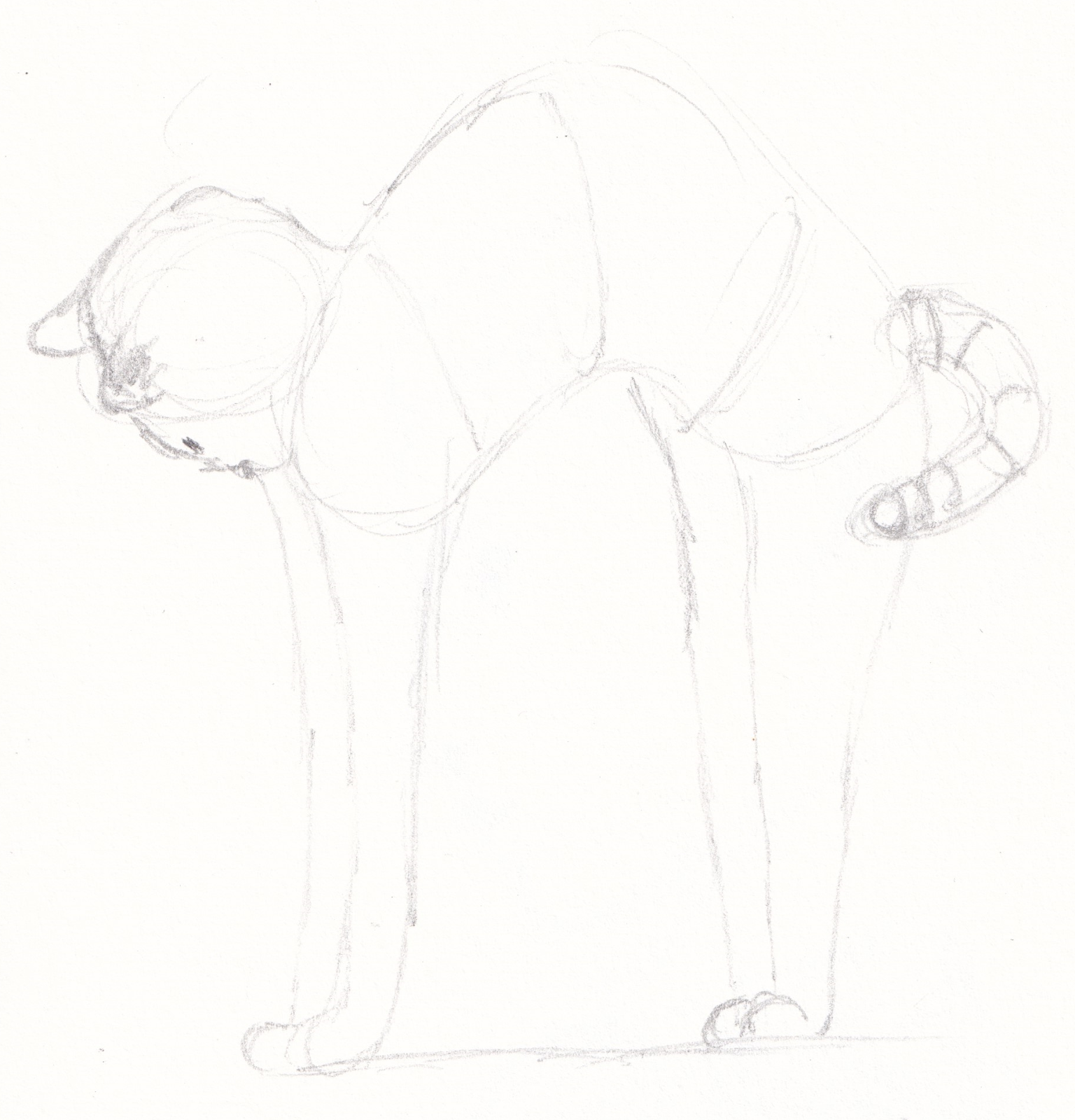
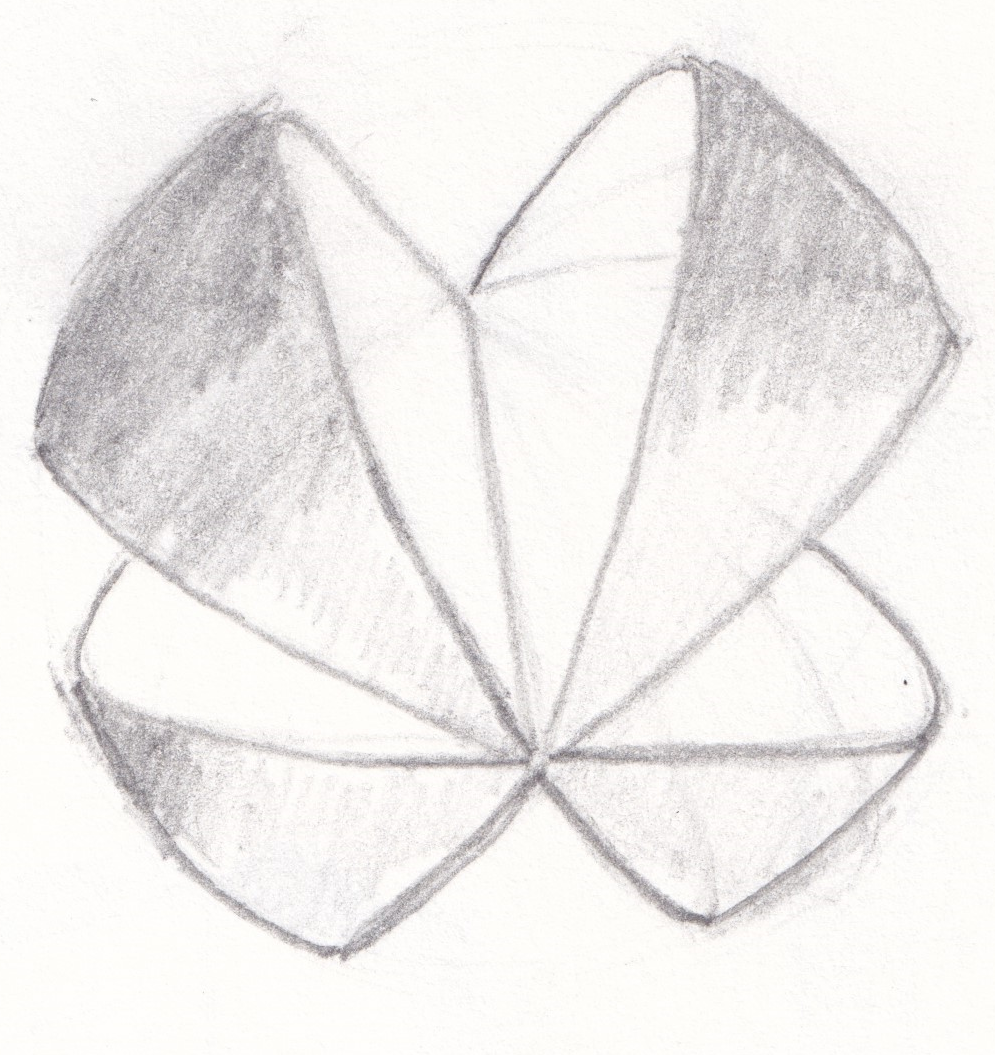
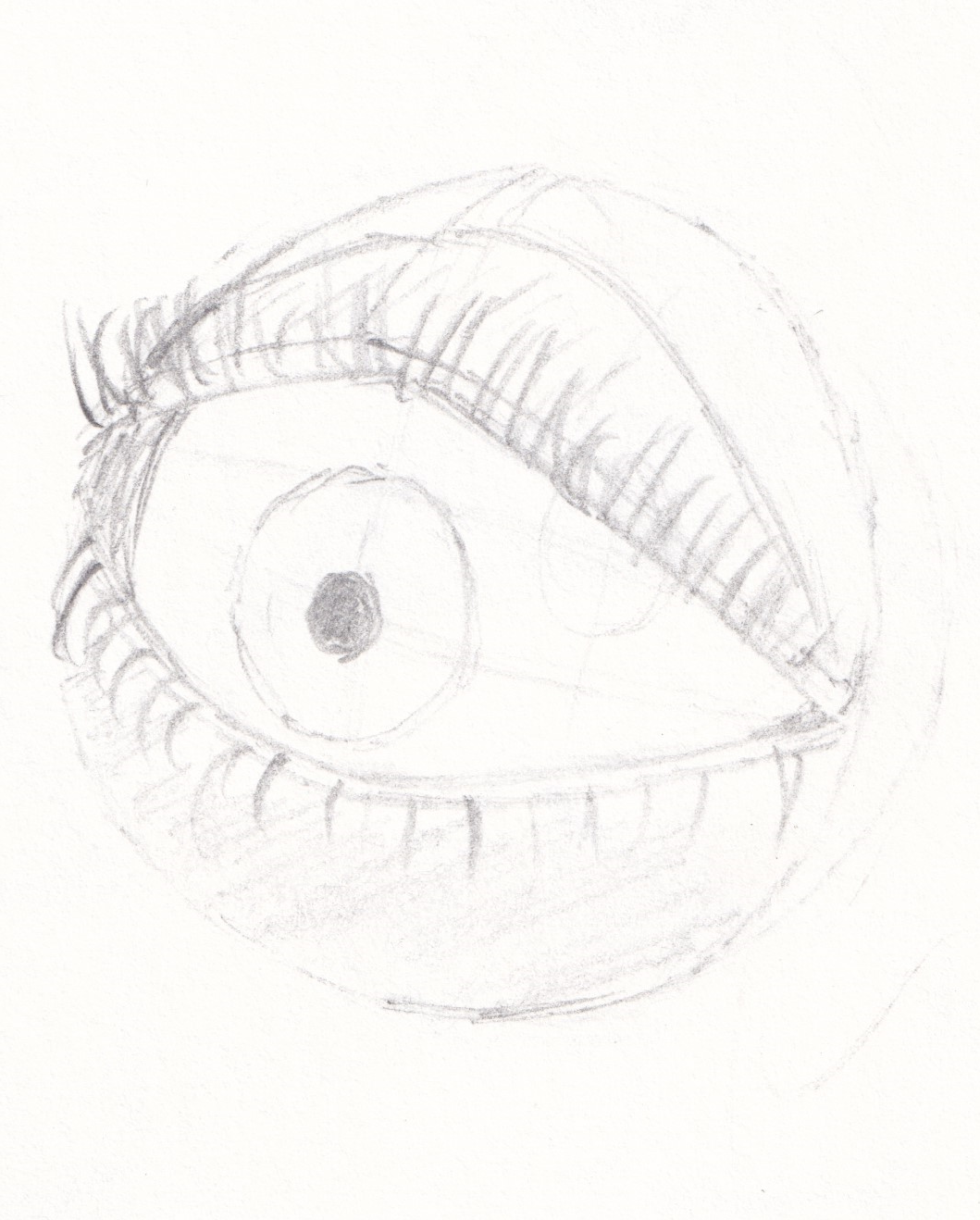

When I’m drawing these, and really thinking about the structure, sometimes I can feel my brain do that quick fix, that slide into place, like perceiving a magic eye picture: I’m understanding what I’m looking at, and relating it well to what I draw on the page.
Today at the art class, that did not happen. Take a look at these failed attempts.

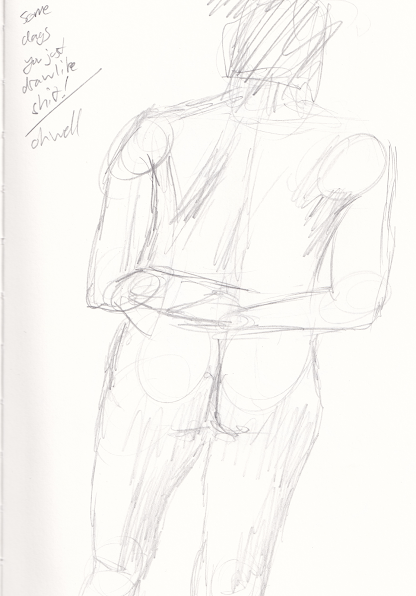
For the whole first hour, I was constantly failing to see the model. I was drawing worse than I’ve drawn in years. I was copying lines, but I was doing a bad job at it. You can’t reproduce a line perfectly, so when you get it just a bit off, to the human eye it looks all wrong, doesn’t make sense. The curves here are just… not correct. I was tracing the lines correctly (sometimes), but I wasn’t making them coherent with their surroundings, understanding the structure.
Our bodies, and any object, are not two-dimensional lines to be spotted. Our bodies are a bunch of tubes, balls, and cuboids, cobbled together with an internal logic. Looking at bodies (or any object) like this is called the Construction Method. This is a method of breaking complex objects down into basic shapes which can then be drawn accurately, or at least coherently. For example, here’s one I did another time, with an iPad, by tracing over a model to study the method. This is the construction method only, with no additional details:
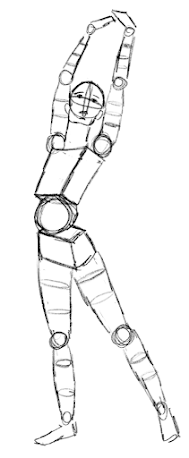
You can see that parts of the body lend themselves to shapes. Around the belly is a ball, because it’s so twistable. The balls-and-tubes of the legs and arms. The big solid box of the ribcage.
At home, I’ll sometimes draw with and then without the construction method, and the difference is clear to me. On the left is someone drawn by looking and only trying to observe. On the right is that same person, drawn with the construction method, imagining the head as a ball with bits added on to it:
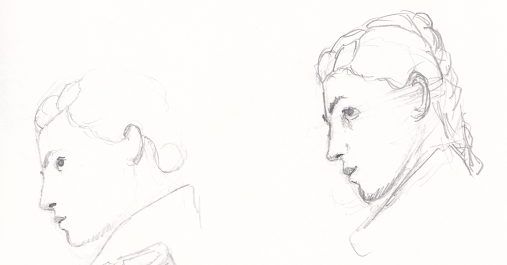
At the class, after the halfway break while everyone was stretching or getting a cup of tea, I took a moment to reset myself. I tried to find a bit of stillness, I enjoyed some artwork from the studio wall, and I found some internal quiet. The class resumed, and I told myself: take it slow. See the model. Break down the complexity. See the shape.
So here are my last few drawings.
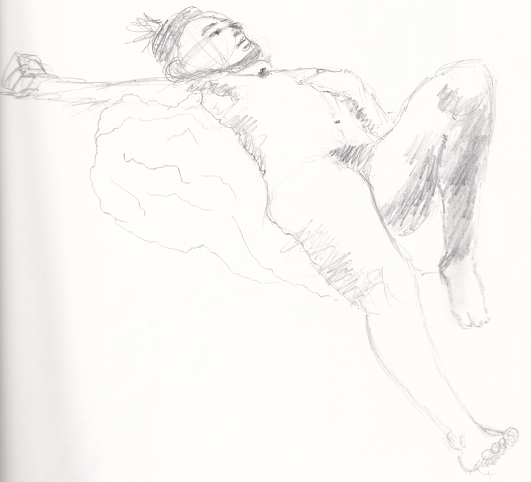
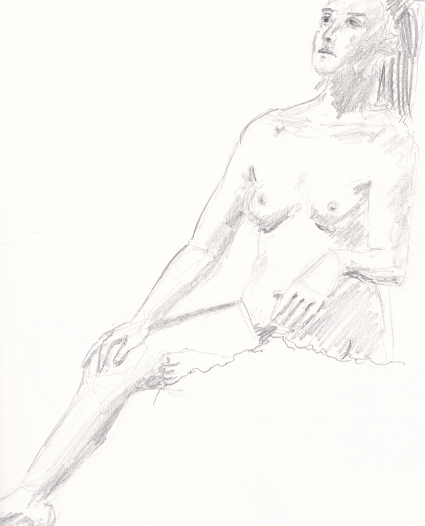
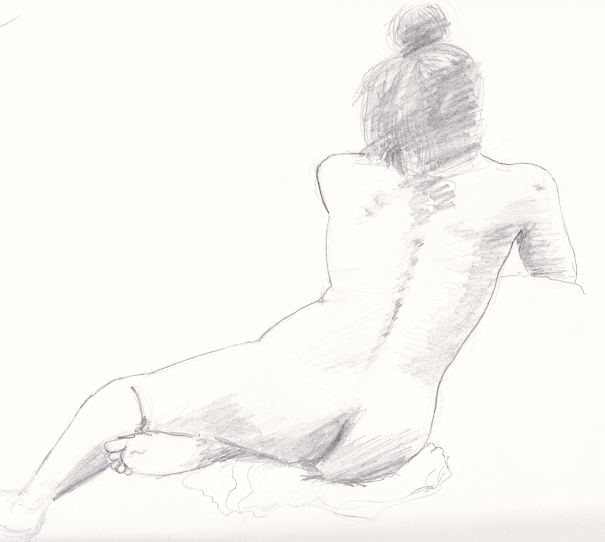
To me, these drawings make a lot more sense, within themselves. The parts where the body interacts with itself (hands on knees, feet against legs) have a strong internal logic. I’m happy that these drawings are getting across a coherent complex model, in a three dimensional space.
And today, it didn’t feel like a magic eye, like my brain sliding into place suddenly. It felt like my brain was stretching. Like a muscle, three days after heavy exercise: a little tender, a little tingly, but very pleasant. Feels like sustainable progress, rather than a quick fix.
 Learning by Doing